
Subscribe now and receive weekly newsletters with educational materials, new courses, interesting posts, popular books, and much more!
Articles

What was Winston Churchill’s Philosophy of Life and Living?
No Comments

A toast by Stalin on Churchill’s 69th birthday, Teheran, 30 November 1943. (Left: Air Marshal Portal; flanking WSC: Anthony Eden, Marshal Voroshilov.) Churchill recalled: “Silly tales have been told of how these Soviet dinners became drinking-bouts. There is no truth whatever in this. The Marshal and his colleagues invariably drank their toasts from tiny glasses, taking only a sip on each occasion. I had been well brought up.” (Imperial War Museum, public domain)
Q: On life and living
If I want to understand Sir Winston Churchill’s philosophy of life and living, what books would you recommend? —B.A., via email
A: Lengthy sources
At first your question reminded us of an old fraternity initiation technique: asking pledges an impossible question. The one I remember personally is: “Tell us your philosophy for living among men.” This was an intentional red herring. Whatever one answered, it obviously would never satisfy the questioner!
But in pondering the thought, there very definitely is a body of work that helps answer your query. Please use our online annotated bibliography for details and notes on books mentioned, or to search for others in the same field. Search for key words like “philosophy.”
Churchill Style
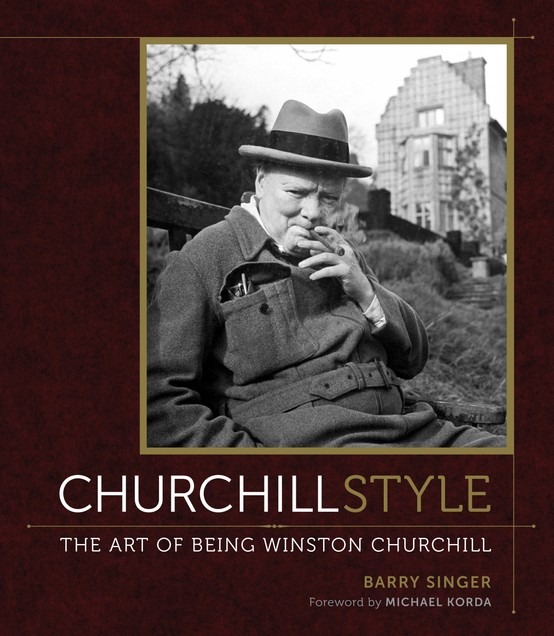 The book to start with is Churchill Style: The Art of Being Winston Churchill, by Barry Singer. Mr. Singer owns Chartwell Booksellers and will sell you an inscribed copy—along with copies of other books below, many of them inscribed by the authors.
Churchill Style expertly discusses Churchill’s philosophy of life, and how he lived it. Barry Singer has a unique approach. He considers nine facets of Churchill that were the essence of his style: autos, books, cigars, dining, fashion, friendships, home, imbibing and pastimes.
The publisher, Harry Abrams, is well known for elegant productions, so Churchill Style is an heirloom, laden with full color illustrations, including rare first editions of Churchill’s books. It is a book readers will refer to often. Mr. Singer’s Hillsdale lecture on the subject is accessible here.
No More Champagne
 Churchill (or his friend F.E. Smith) was known to have declared, “Winston is a man of simple tastes. He is quite easily satisfied with the best of everything.”
With no inherited wealth, WSC had to earn enough to finance his pleasures, remarking, “I lived from mouth to hand.” By far the standard work on his finances is David Lough’s No More Champagne: Churchill and His Money. Reviewing this book for Hillsdale, Michael McMenamin wrote:
Ploughing fresh ground, Lough offers a well-written, deeply researched text about Churchill’s finances, and how they affected his politics. As private as some may regard personal finances, the book does not detract from Churchill’s greatness or humanity. It is an absorbing story about an extraordinary man ensuring his financial survival with one hand, while warning about the danger to, and then leading the fight for, Western Civilization with the other. Uniquely, Churchill did both.
Churchill’s Bestiary
 Animals were important to Churchill in life. He was always surrounded by pets—or, at least, animals he thought of as pets. He was fiercely loyal to those he “knew personally,” and liked to use animal analogies in his speeches. Fortunately for students of his life, 2019 brought us a comprehensive book devoted to the subject: Piers Brendon’s Churchill’s Bestiary reviewed here. From our review:
This is an encyclopedic account of Churchill’s life with animals, starting with “Albatross” and ending in “Zoos.” That spans only a fraction of Piers Brendon’s comprehensive book. He avoids repeating material in previous accounts, and goes much deeper into the subject.
Most of the anecdotes have not appeared previously and are thus quite valuable. Piers Brendon deeply investigates each species. The text is sprightly and readable, “unputdownable.” Anyone interested in this aspect of Churchill’s life owes it to themselves to buy a copy.
Churchill by Himself
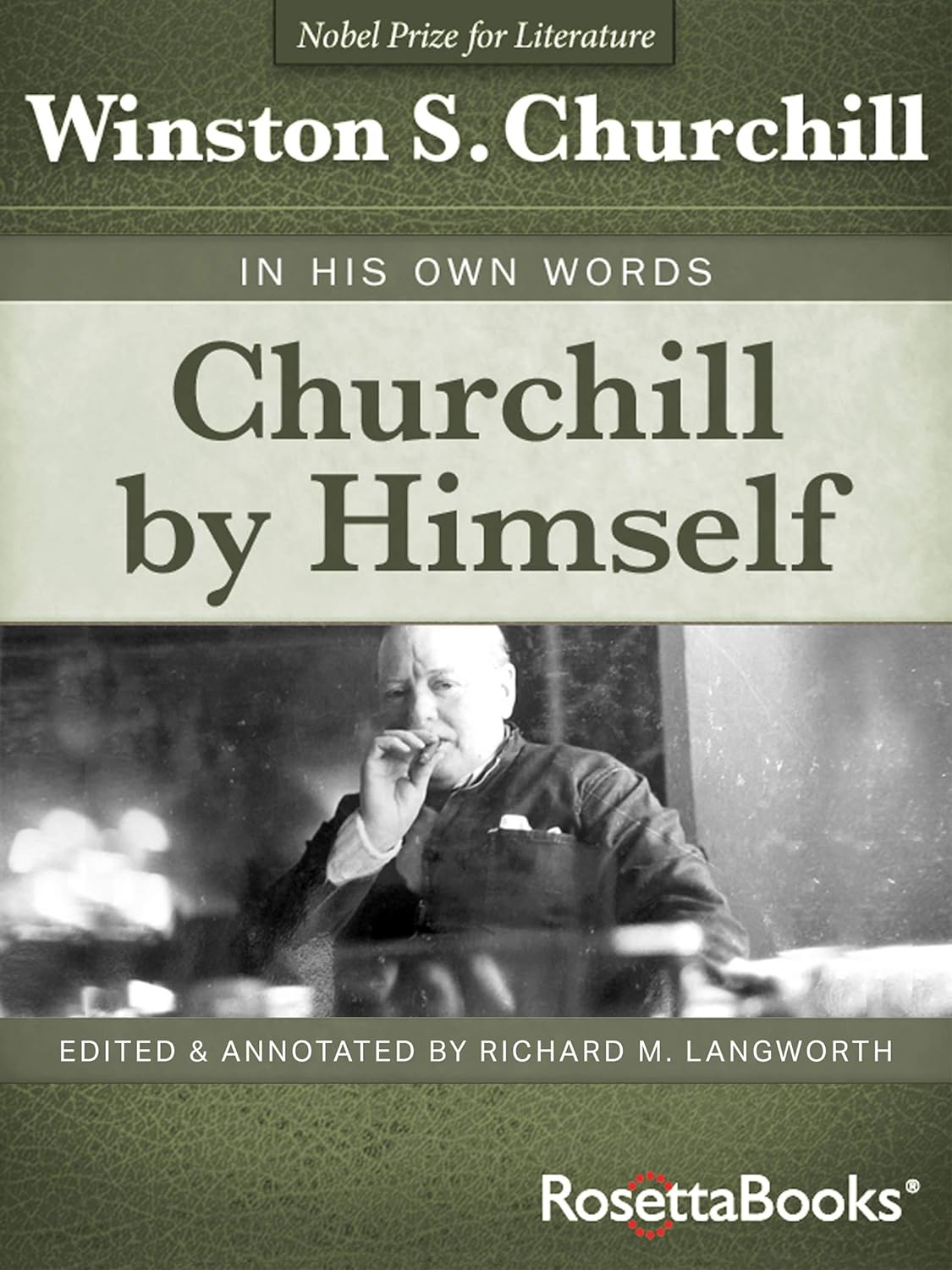 For Sir Winston’s own comments on his philosophy of life, see the chapters “Personal Matters” and “Tastes and Favorites” in my book, Churchill by Himself aka Churchill in His Own Words. Here are quotations relating to Churchill personally: his character, habits and family, and his prescriptions for living life to the full, which he certainly did.
Many quotations speak to his political and personal characteristics, some with a high degree of frankness. Reactions to election results, and thoughts about his being variously a Conservative and a Liberal, are pithy and pointed. Of course his domestic existence always came second after politics. But family life was a rousing, warm affair, except for his occasionally tempestuous relationship with his son Randolph.
WSC’s comments to and about his wife Clementine, the best of which I trust are here, would make a perfect series of greeting cards for any husband wondering how to express himself. Their daughter Mary gave testimony to her father’s favourite maxim describing his marriage: “Here firm though all be drifting.”
What strikes us about these quotations as a group is what one of his secretaries said about Churchill: “He was so human, so funny—that always saved the day.” Marshal Tito, a perceptive man, was once asked what most struck him about WSC. “His humanity,” Tito said immediately. “He is so human.”
Philosophy of politics
 If your interest extends to political life there are three chapters in Churchill by Himself containing quotations on war and the two World Wars. Another chapter covers “Political Theory and Practice.” Also, there are at least two powerful scholarly studies of his political philosophy that should be part of the serious library.
Sir Martin Gilbert’s Churchill’s Political Philosophy (1981) is rare but worth seeking out. (Try bookfinder.com,) It is based on a Gilbert lecture which uniquely captured Churchill’s attitudes toward politics and government. WSC’s overriding doctrine, Gilbert says, can be summarized in a sentence: “His quarrel was with tyranny.”
Likewise excellent on political philosophy is Larry Arnn’s Churchill’s Trial: Winston Churchill and the Survival of Free Government. As a bonus, this book contains WSC’s essay, “Mass Effects in Modern Life.” From the book review by Justin D. Lyons:
Churchill studies reveal important lessons that remain powerfully relevant for the leaders and citizens of free societies. This notion is itself founded on the belief that though the threats to civilization may have altered since Churchill’s day, there is consistency between his challenges and ours—that he is a good guide to follow in the cause of defending freedom.
Such a belief must lie behind any conception of history as providing guidance. If these commonalities do not exist, neither Churchill’s story, nor history in general, has anything to say to us now. A unique and important work on Churchill’s political thought.
Addenda
These books focus closely on your question, though we could go on exploring specialized studies. For example, who were the mentors who made Churchill what he was in life? For three such individuals, see Michael McMenamin’s “Churchill’s Mentors,” Part 1 of which is posted here, with links to two more parts.
Churchill’s life was long and occupies the authors of over 1200 books, not including the thirty-one volumes of Official Biography. Many contain exaggerations, and it is well to look out for them. For just one such example see “On Churchill’s ‘Sybaritic’ Lifestyle” (2016).
We hope this answers your question and provides at least a start on a complicated but intriguing subject.