
Subscribe now and receive weekly newsletters with educational materials, new courses, interesting posts, popular books, and much more!
First World War
“Much To Be Thankful For”: Reparations and Magnanimity, 1918

Churchill’s views about borders and “captive nationalities” differed between the World Wars. In 1918 he opposed shifting populations against their will, condemning Germany’s 1870 annexation of Alsace-Lorraine. In 1945 he was agreeable, even anxious, to shift the Polish state at the expense of Poles in the east and Germans in the west. But by then there were graver worries, and no one was speaking of a “war to end wars.”
“The World Crisis” (12): “The Eastern Front” and Romania’s Error

Churchill’s account of Romania in the Great War expresses his lifetime view that in the face of aggression, there is no room for neutrality. In 1940 he remarked of the neutrals: “Each one hopes that if he feeds the crocodile enough, the crocodile will eat him last.” He had no better use for Romania’s “ambiguous watchfulness” in the previous war. It was, he insisted, utterly ineffective.
“The World Crisis” (11): Churchill’s “Armistice Dream”

“So they said: ‘It is no use setting up a League of Nations without Russia. If we are to accomplish this it can only be with the aid of Germany. Germany knows more about Russia than anyone else. Germany let Lenin loose on Russia. Ought she not to play her part in clearing up this whole eastern battlefield like the others?’”
Did Churchill’s Admiralty Try to Recruit Rudolf Diesel?

There is no doubt that British naval thinkers were concerned that Germany might steal a march on Diesel-propelled submarines, and even Churchill’s “land caterpillars” (tanks). It is well known that Diesel intended to meet with the British about licensing his invention when he disappeared overboard in 1913. We continue to search for evidence of Churchill’s involvement, as First Lord of the Admiralty, with inventor himself.
Lord Beaverbrook Compares Churchill and Lloyd George

“Lloyd George was not indifferent to all the past, of his struggles with a Church and an aristocracy he deemed alien to his own simple people of Wales. Churchill was infused with a broader sense of history. He felt that he represented not only the living electorate but also the mighty hosts of the dead, who had made the immense and majestic national heritage which he must tend and improve and hand on to the generations yet to come. He stood between the past and the future, and felt that he must not fail either.”
“The World Crisis” (10): President Wilson and the “Peace Argosy”

Churchill’s words are eerily current a century after he wrote them: “It is difficult for a man to do great things if he tries to combine a lambent charity embracing the whole world with the sharper forms of populist strife.” As a statesman after the Great War President Wilson failed to understand either his opponents or his friends. “As Captain, he went down with his ship.”
The Russian and Greek Impasse, 1915: “The Level of Events”

“I beseech you at this crisis not to make a mistake in falling below the level of events. Half-hearted measures will ruin all.... No armies can reach Constantinople but those which we invite, yet we seek nothing here but the victory of the common cause. Tell the Russians that we will meet them in a generous and sympathetic spirit.... But no impediment must be placed in the way.” (WSC to Sir Edward Grey, 6 March 1915)
“The World Crisis” (9): Churchill and Air Power in the Great War

Despite the innovations in air power, Churchill recognized that it was “not reasonable to speak of an air offensive as if it were going to finish the war by itself.” If anything, air attacks would see “the combative spirit of the people roused, and not quelled.” This lesson, learned at a time when “the Few” were much fewer, would instruct Churchill in another even greater human conflict to come.
“The World Crisis” (8): The Battle of Jutland, 1916
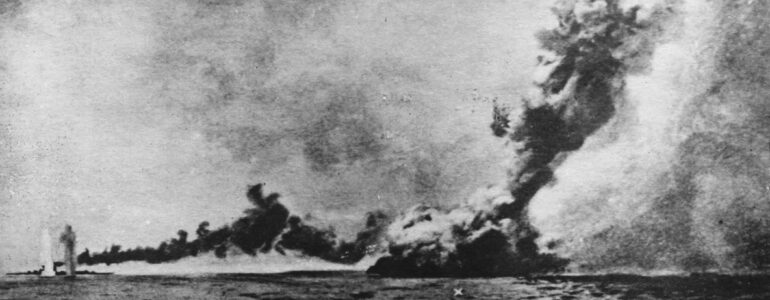
“Churchill was right to focus on the stakes, for one of the most difficult decisions of the Battle of Jutland was whether to fight it at all. The British already held naval superiority and need not engage unless they expected to emerge victorious. The Admiralty and the Fleet Commander, Sir John Jellicoe, thought they could defeat the Germans in a traditional naval battle. But one variable gave them pause: the torpedo.”
“The World Crisis” (7): “Soul-Stirring Frenzy,” Verdun to the Somme
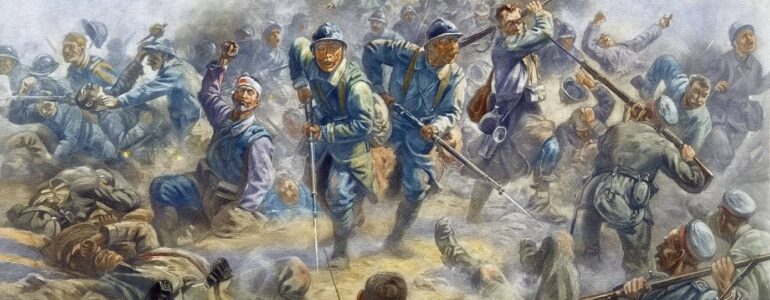
For Churchill, Verdun, the Somme and Passchendaele were lessons on what to avoid: protracted trench warfare and slaughter in exchange for a few yards of territory. The first great killing ground, Verdun, typified the horrors ahead. It was also a proving ground for terrible new technologies like machine guns, poison gas, anti-aircraft guns and flamethrowers. All these were features of a war Churchill had feared and tried to stop.
“The World Crisis” (6) Lessons of the Dardanelles and Gallipoli
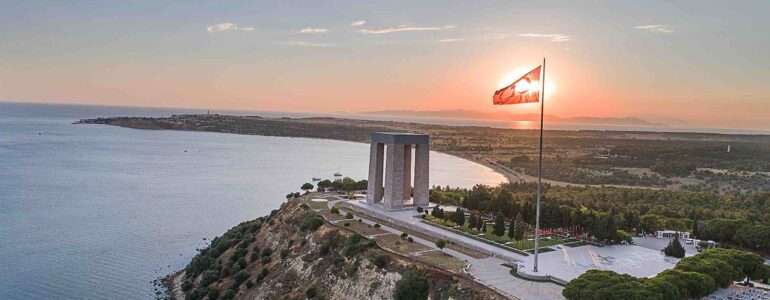
Winston Churchill usually avoided making the same mistake twice. He certainly regarded the Dardanelles and Gallipoli as his worst experience. “I was ruined for the time being in 1915 over the Dardanelles,” he wrote. “[A] supreme enterprise was cast away, through my trying to carry out a major and cardinal operation of war from a subordinate position. Men are ill-advised to try such ventures. This lesson had sunk into my nature.”
“The World Crisis” (5) Dardanelles to Gallipoli: Failure is an Orphan
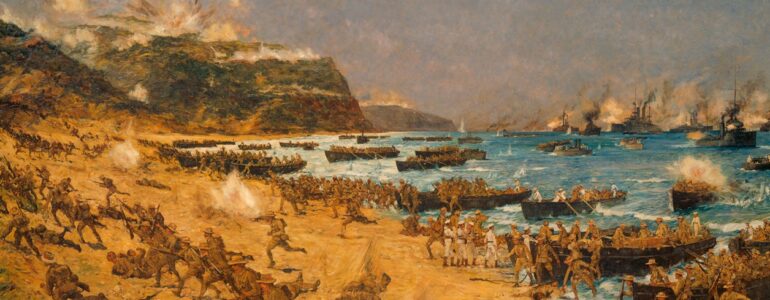
What a story! A prime minister unwilling to be prime; a war minister reluctant to make war; backbiting among colleagues; idle babble to outsiders; changes of tune; dreams about the spoils of war; unwillingness to hear those who understood. It doesn't sound so far removed from the criticism now thrown at Western governments who have inherited the mistakes of a generation, and are expected to mend them overnight.