
Subscribe now and receive weekly newsletters with educational materials, new courses, interesting posts, popular books, and much more!
Articles

With regard to the article, “Why the Turks Like Churchill” I was unable to track Churchill’s remarks on the death of Mustafa Kemal (Ataturk) and wonder if you could advise me. —Mustafa Armağan, Istanbul
Churchill wrote:
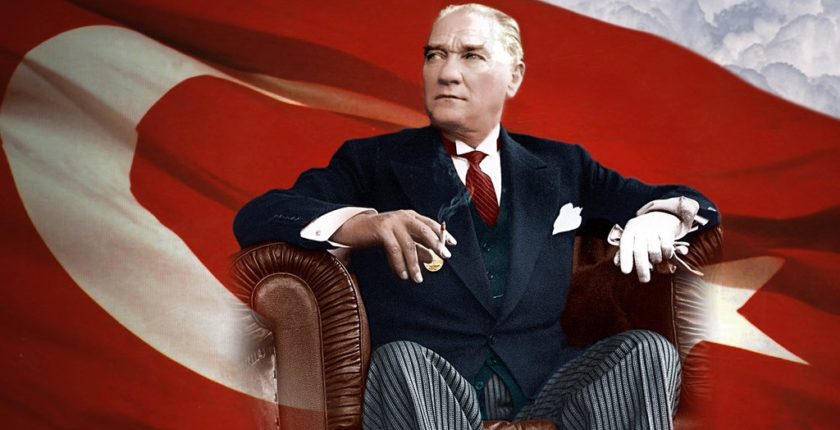
The tears which men and women of all classes shed upon his bier were a fitting tribute to the life work of a man at once the hero, the champion, and the father of modern Turkey. During his long dictatorship a policy of admirable restraint and goodwill created, for the first time in history, most friendly relations with Greece.
This quotation is from Churchill’s article, “Eastern Europe on the Morrow of Munich,” published in the Daily Telegraph and Morning Post, London, 15 December 1938. It was republished as “New Lights in Eastern Europe,” in Churchill’s book Step by Step (London: Thornton Butterworth, 1939).
Churchill’s grief over Atatürk’s loss was genuine. Kemal had fought against the Allies, and had precipitated the dangerous Chanak Crisis of 1922. Nonetheless, Churchill considered Atatürk a statesman. He had long admired the great Turkish leader who, later in his career, adopted Churchillian principles of “summit conferences” and compromise with ancient foes.





I have a question. Did Churchill report that Mustafa Kemal Ataturk massacred people in Izmir (then Smryna) in a newspaper in 1929?
–
Probably. Between 11 February and 6 March 1929, Churchill’s The Aftermath (Vol. IV of The World Crisis) was serialized in The Times. We don’t have the newspaper text, but it almost certainly included Churchill’s account of the 1922 Chanak Crisis (Chapter 19 in the book), in which he states how this threat of war between Britain and Turkey began:
“…within a fortnight from August 26 [1922] the Greek army which had entered Anatolia at the request of Great Britain, the United States and France, which had been for three years the foundation of Allied policy against Turkey and the object of inter-Allied intrigues, was destroyed or driven into the sea. Turkey became once again the sole master of Asia Minor, and Mustafa Kemal’s army, having celebrated their triumph by the burning of Smyrna to ashes and by a vast massacre of its Christian population, turned the heads of their columns hopefully towards Constantinople and the Straits.”
Churchill admired Ataturk as a statesman and creator of modern Turkey, who later forged friendly relations with Greece. Still, he accurately described the actions that nearly led to war at that time. We recommend the “Chanak” chapter in Martin Gilbert, Winston S. Churchill Vol IV, World in Turmoil 1916-1922, available from Amazon.
It’s important to recognize that Churchill, like many contemporaries, was writing from the perspective of a British statesman with his own biases and political motivations. His portrayal of these events reflects the views of the time, particularly in the context of the post-World War I geopolitical landscape and the Chanak incident, where British interests were directly involved.
–
No argument. The thing to consider is what were British interests in Chanak? Britons themselves were divided. Churchill’s position was quite different from that of the Prime Minister, which led to the fall of his government.
Why would a victorious army burn the city they have took back from the enemy. Retreating Greek army did that as they did to all the Turkish villages they were backtracking from ?Massacres to the Turkish people during their retreating would be found in the archives on both sides.
–
Undoubtedly there was much to answer for on both sides.